Show Key Points
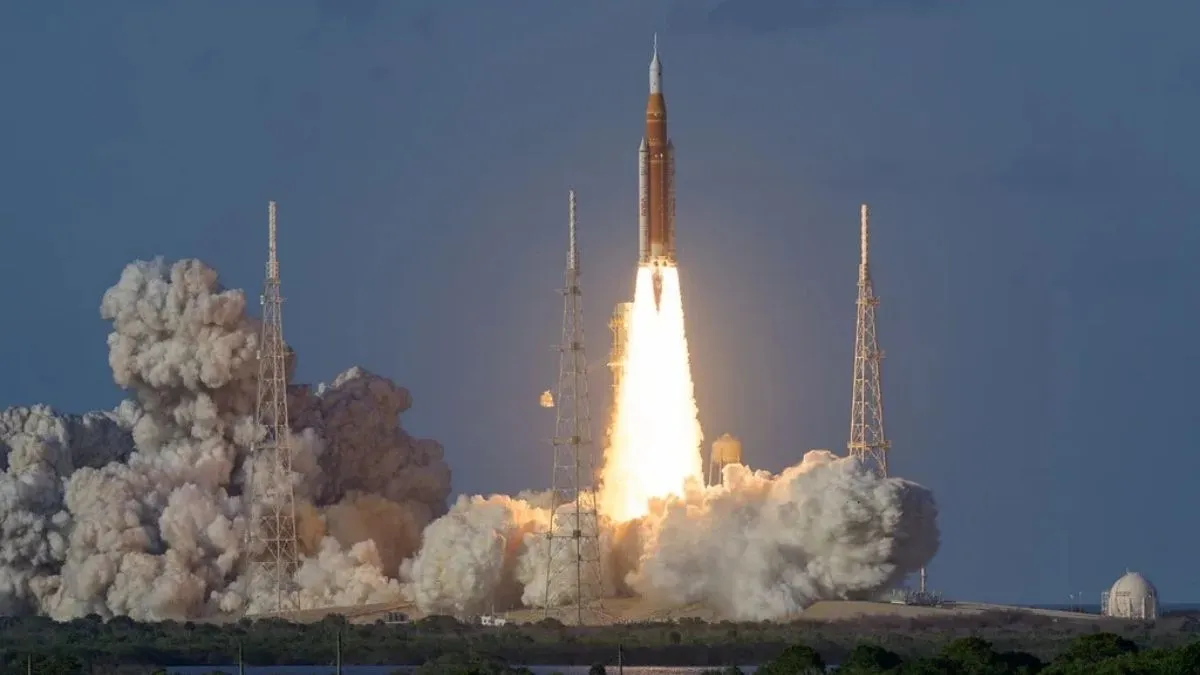
The wait is finally over! NASA's Artemis 2 mission successfully cleared the tower at Kennedy Space Center, making four astronauts the first to go into space. This mission serves as the critical penultimate step before humans return to the lunar surface.
Utilizing the most powerful rocket ever built, the Space Launch System (SLS), the Orion capsule is currently executing its initial Earth orbit maneuvers. Unlike the uncrewed Artemis 1 test, this flight carries Commander Reid Wiseman, Pilot Victor Glover, Mission Specialist Christina Koch, and the CSA's Jeremy Hansen.
Their 10-day trip will cover about 685,000 miles, and they will test life-support systems in the harsh radiation of deep space to make sure that future lunar landings are safe.
Who are the Astronauts Aboard Artemis 2?
The Artemis 2 crew is a group of historic firsts for NASA and the space community around the world. These people were chosen not only because they were good at their jobs, but also because they could handle the high-pressure situation of a 10-day lunar flyby.
-
Reid Wiseman (Commander): A veteran of the International Space Station, leading the mission's tactical operations.
-
Victor Glover (Pilot): Making history as the first person of color to fly a lunar mission.
-
Christina Koch (Mission Specialist): The record-holder for the longest single spaceflight by a woman, now the first woman to head toward the Moon.
-
Jeremy Hansen (Mission Specialist): Representing the Canadian Space Agency (CSA) as the first non-American to leave Earth's orbit.
As the flight crew for Artemis II prepares to launch—we want to wish the entire crew, scientists, engineers, and everyone at @NASA and @NASAKennedy who have worked on this mission for years every success! As the first deep-space mission in over 50 years, with a historic mission… pic.twitter.com/jb8UGo2Zuy
— Rep. Melanie Stansbury (@Rep_Stansbury) April 1, 2026
What is the Artemis 2 Mission Timeline?
The mission is meticulously planned to test every system of the Orion spacecraft before it is cleared for the Artemis 3 lunar landing.
| Phase | Estimated Duration | Key Objective |
| Launch & Earth Orbit | 24 Hours | System checks and solar wing deployment in high Earth orbit. |
| Trans-Lunar Injection | Day 2 | SLS upper stage pushes Orion toward the Moon. |
| Lunar Flyby | Day 5 | Reaching the far side of the Moon, 4,700 miles from the surface. |
| Deep Space Return | Days 6-9 | High-speed trajectory adjustment for Earth reentry. |
| Splashdown | Day 10 | Recovery by the U.S. Navy in the Pacific Ocean. |
Also Read - NASA Artemis 2 Moon Rocket Returns to Pad 39B: Historic Rollout Begins for April Launch
How does Artemis 2 differ from the Apollo missions?
While the Apollo missions focused on the Space Race, Artemis 2 is built on a foundation of international collaboration and long-term sustainability. According to NASA Associate Administrator Amit Kshatriya, "Artemis 2 is the proving ground."
While Apollo 13 used a similar free-return trajectory out of necessity, Artemis 2 uses it by design to ensure that if any system fails, the Moon’s gravity will naturally pull the crew back to Earth.
This mission also tests the new Optical Communications system, which allows for high-definition video streaming from deep space, a feat impossible during the 1970s.
Also Read - When will NASA Launch Artemis II Moon Mission to Orbit the Lunar Surface?
The successful trajectory of Artemis 2 signals a definitive shift in NASA’s lunar ambitions. By proving that the Orion life-support systems can sustain a crew beyond low Earth orbit, the agency is effectively opening the door for the Artemis 3 landing. As the crew looks back at a receding Earth, the world watches the beginning of a permanent human presence on the Moon.



Comments
All Comments (0)
Join the conversation