Lakes are often seen as permanent features of the landscape, quietly existing for thousands of years and supporting nearby communities, wildlife, and ecosystems.
In the United States alone, lakes provide drinking water, support agriculture, regulate local climate, and serve as vital habitats for birds and fish.
However, history and modern science show that some lakes can disappear much faster than people expect.
In some cases, a lake that existed for decades or even centuries has drained within hours. In other cases, lakes slowly shrink year after year until little more than a dry basin remains.
The disappearance of lakes is not caused by a single factor. Natural geological processes, climate-related changes, and human activities all play a role. Events such as earthquakes, sinkholes, melting ice, dam failures, and excessive water use have caused lakes across the United States to drain or vanish entirely.
READ | Which U.S. Mountain Range is Called the “Great Smokies”?
Which lakes in the U.S. had disappeared?
One of the most dramatic lake losses in U.S. history occurred at Lake Peigneur in Louisiana in 1980. This freshwater lake covers around 1,300 acres and was used for fishing and recreation.
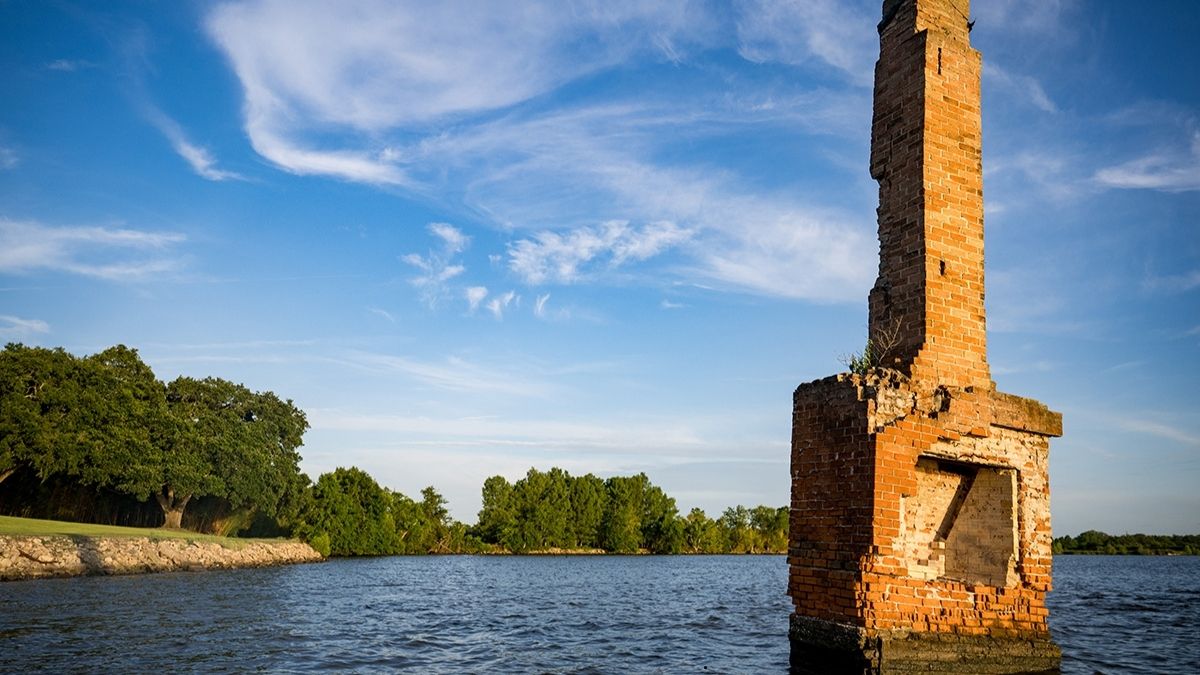
Lake Peigneur (Source: 64parishes.org)
During oil drilling operations, a rig accidentally punctured the roof of an underground salt mine beneath the lake. The collapse created a massive whirlpool that pulled drilling platforms, barges, and water into the mine.
Within hours, nearly all of the lake’s water drained underground. Although the lake later refilled due to surrounding water sources, its depth, shoreline, and ecosystem were permanently altered.
Another example occurred in Wisconsin in 2008, when Lake Delton, a man-made lake, drained in less than two hours. Heavy rainfall caused the earthen dam holding the lake to fail.
Once the dam broke, fast-moving water carved channels through the land, carrying the lake away. This event highlighted how poorly maintained or aging infrastructure can lead to sudden lake loss.
Natural Geological Causes Beneath Lake Beds
Some lakes disappear because of what lies beneath them. In areas with limestone or porous rock, underground channels can slowly form.
When these channels open suddenly, water drains away. While this process is more common in certain parts of the world, similar geological risks exist in regions of the United States with sinkhole-prone terrain.
Earthquakes can also cause lakes to drain by cracking the ground below them. When the lakebed splits or shifts, water may flow into underground spaces that were previously sealed.
These events are unpredictable and often happen without warning, leaving behind dry basins where water once stood.
Ice, Permafrost, and Climate-Driven Lake Loss
In colder U.S. regions, especially Alaska, lakes are increasingly threatened by melting ice and permafrost. Permafrost acts as a frozen barrier that keeps water in place.
As temperatures rise, this frozen ground begins to thaw. Once it weakens, water can escape through newly formed channels.
Scientists have observed lakes on glaciers and ice sheets draining rapidly when cracks form beneath them. The weight of the water causes fractures to spread, allowing billions of gallons to escape in a short time.
Which lakes are disappearing slowly over time?
Not all lakes vanish suddenly. Some shrink gradually due to long-term water diversion and evaporation. In the United States, the most concerning example is the Great Salt Lake in Utah.
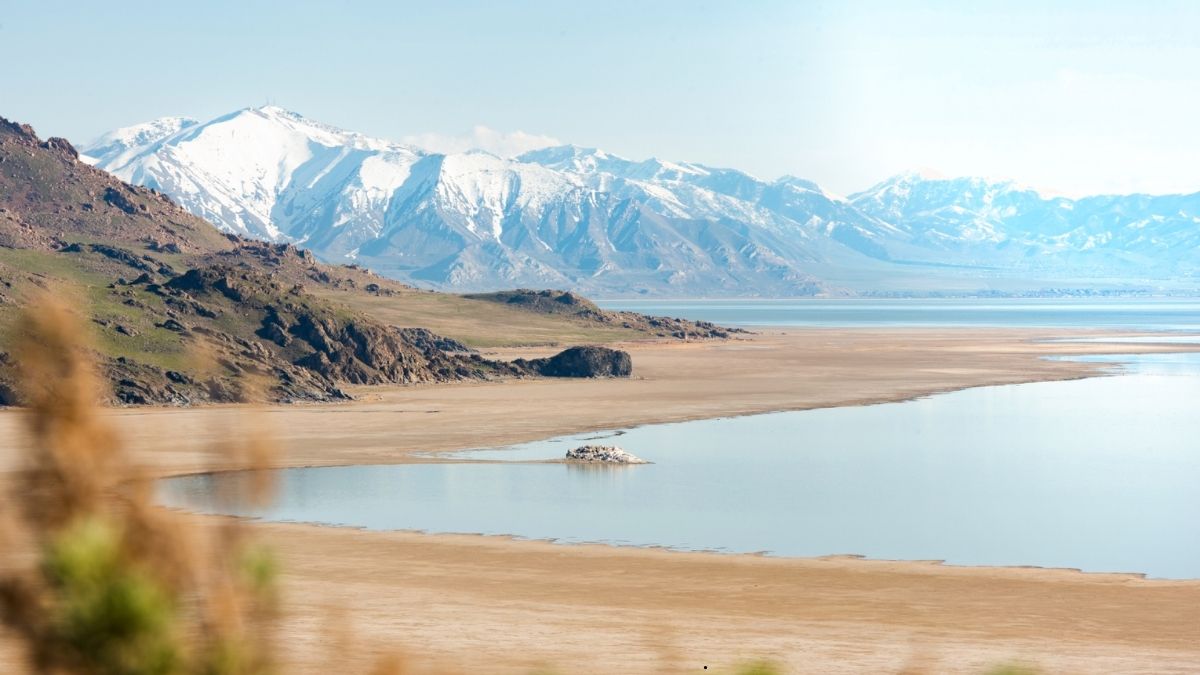
Great Lake, Utah (Source: udsu.edu)
Over the past 175 years, it has lost approximately 73 per cent of its water volume. Since 2020 alone, water levels have dropped at an alarming rate.
The main causes include river diversions for agriculture, industrial water use, and ongoing drought conditions. As the lake shrinks, salt concentrations increase, making survival difficult for native species. als
The exposed lakebed also contains toxic dust, which can become airborne and pose serious health risks to nearby communities.
Recommended Reading:




Comments
All Comments (0)
Join the conversation