-1769678148517.webp)
Key Points
- Los Angeles is considered California's largest city based on land coverage.
- LA's expansion resulted from annexations, industrial growth, and transportation.
- LA's diverse geography presents unique urban planning challenges.
California is home to the highest number of people of any state in the United States, as well as many famous cities with distinctive geographical, cultural, and economic characteristics. Los Angeles is well known for its large population and its entertainment industry. In addition to Los Angeles being known for having a population, California has cities that are large in terms of land area as well.
Cities' size by area can have an impact on urban planning, infrastructure, and development patterns. Cities that are larger than other cities can have urban, suburban, and in many cases even rural types of landscapes located in them.
By understanding which city in California is located on the largest land area, we can learn about the way California has developed its urban, suburban, and rural areas by managing the diversity of land use throughout the state through its population density, types of homes and residential areas, parks, and types of natural resources.
Check Out: Which is the Largest City in California? (By Population)
Which Is the Largest City in California? (by Area)
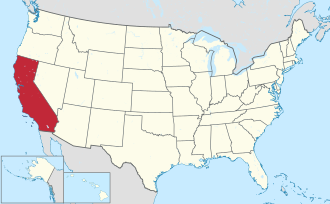
Source: Wikipedia
Los Angeles (or LA) has long been considered the 'biggest' city in California based on coverage area-that is, how much land area the type of land and the total population are located on. LA covers about five hundred three square miles from the beach to the northern part of the San Fernando Valley, and consists of many different types of neighborhoods, hills, and flat lands.
Due to its size, LA is the largest city in the state of California, but also one of the largest cities in the United States. With LA's size, there may be a significant number of residential, commercial and industrial developments, as well as parks and other forms of open spaces, which gives LA its unique appearance as an urban centre.
Why Does Los Angeles Cover So Much Land?
LA was created by the annexation of towns and neighborhoods in the duration since its original settlement. The industrial revolution, a massive influx of people, and the creation of freeways and railroads all played a role in allowing the city to expand over a large area.
How Does Size Impact Urban Planning?
Because of Los Angele’s large geographic area, urban planning must carefully consider issues like traffic, housing and service delivery. LA has a mix of heavily urbanized zones, suburban neighbourhoods and undeveloped land; therefore, planning for this range of land uses creates additional challenges for the city.
What Major Characteristics Are Found In Its Geography?
LA has many different types of geographic features, including mountains, beaches, valleys and deserts. All of these different features are home to major amenities such as parks, attractions, airports and commercial centres, giving tourists and local residents many different opportunities for experiences within the same city.



Comments
All Comments (0)
Join the conversation