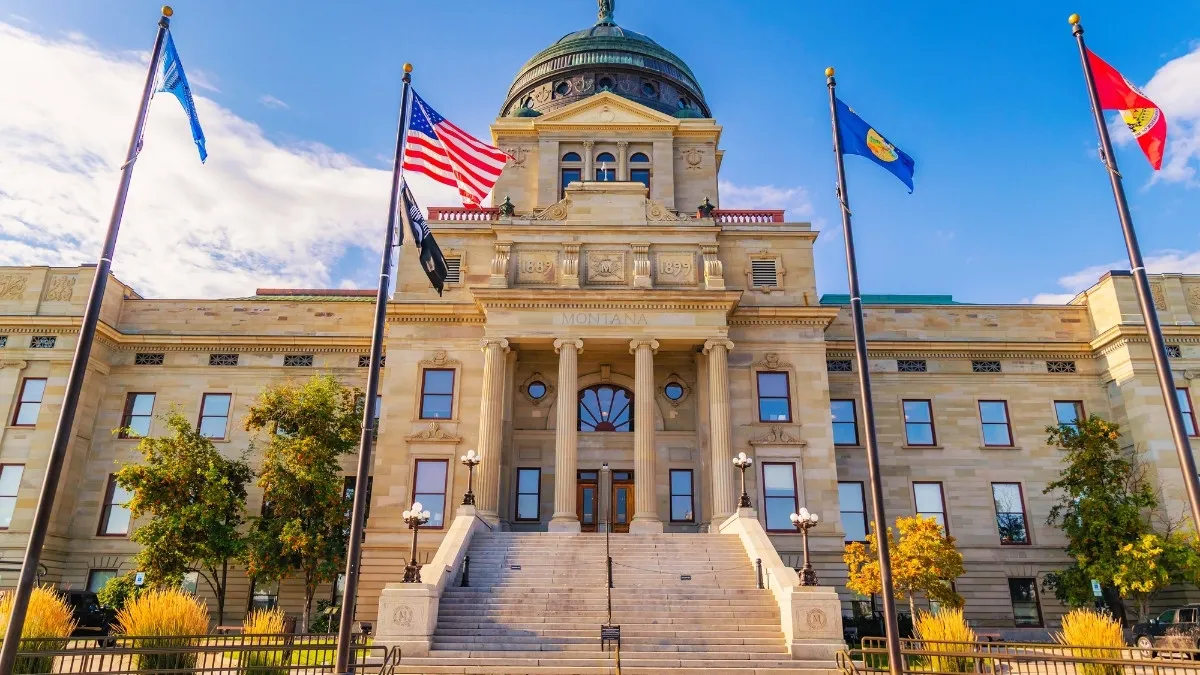
The capital of Montana is Helena, a city in the western United States that serves as the seat of the state government.
Helena is not the largest city in Montana—Billings holds that title—but it is where the governor’s office, the state legislature, and many key state agencies are located.
According to the U.S. Census Bureau, Montana’s population was about 1.08 million in 2020, with Helena itself home to roughly 32,000 people, making it a relatively small but politically important capital.
This article will explain why Helena is Montana’s capital, how it became the capital, and what role it plays in the state’s government and daily life.
What is the capital of Montana?
The capital of Montana is Helena, located in Lewis and Clark County in the western part of the state.
Helena has been the capital of Montana Territory since 1875 and has remained the capital of the state of Montana since it joined the Union in 1889.
Helena sits at an elevation of about 3,955 feet (1,205 meters) in the Rocky Mountains, near the Missouri River and at the eastern foot of the Continental Divide.
This location helped it grow as a mining and trade center in the 19th century, which later supported its role as the state capital.
Why did Helena become the capital of Montana?
Helena became Montana’s capital after a series of territorial and state‑level decisions that reflected the state’s shifting population and politics.
When Montana was still a territory, the capital moved from Bannack to Virginia City and then to Helena in 1875, as gold discoveries and population growth pulled power toward the Helena area.
After Montana became a state in 1889, voters had to choose a permanent capital from several competing cities, including Helena, Anaconda, Butte, Great Falls, and others. In a tight election in 1894, Helena won by a narrow margin, securing its place as Montana’s official capital.
Key points:
-
Helena’s early gold‑rush wealth and central location made it a strong candidate for the capital.
-
The 1894 vote was very close, with Helena beating Anaconda by less than 2 percent of the total votes.
-
Once chosen, Helena began building the Montana State Capitol, which opened in 1902 and still houses the state legislature today.
What role does the capital of Montana play today?
Today, Helena serves as the political and administrative heart of Montana, even though it is much smaller than cities like Billings or Missoula.
The Montana State Capitol building, located at 1301 East 6th Avenue, is where the state legislature meets and where many state agencies and the governor’s office operate.
Helena also hosts:
-
The Montana Supreme Court and other branches of state government.
-
State‑level policy meetings, budget debates, and decisions that affect schools, roads, health care, and natural resources across Montana.
-
Public tours and civic‑education programs that help residents understand how state government works.
Because Montana is the fourth‑largest U.S. state by area but has a relatively small population, Helena’s role as a compact capital city helps keep state operations centralized and efficient.
Quick facts about the capital of Montana
Here are some clear, memorable facts about Helena, the capital of Montana.
-
Helena is the capital city of Montana and the county seat of Lewis and Clark County.
-
The city sits at about 3,955 feet (1,205 meters) above sea level in the Rocky Mountains.
-
Montana became the 41st state in 1889, and Helena has been its capital ever since.
-
The Montana State Capitol building was completed in 1902 and is often called “The People’s House.”
-
Helena is smaller than Montana’s largest city, Billings, but remains the center of state government and politics.
How Helena compares to other Montana cities
The table below compares Helena with Montana’s largest city and gives a sense of where the capital fits in the state.
| City | Role in Montana | Approximate population (2020) | Notes |
| Helena | State capital and political center | About 32,000 | Home to the Montana State Capitol and many state agencies. |
| Billings | Largest city in Montana | About 117,000 | Major economic and commercial hub, but not the capital. |
| Missoula | Major university and cultural center | About 74,000 | Known for education and outdoor recreation, not state government. |
This contrast shows that Montana’s capital is not the biggest city, but it is the most important for state‑level decisions.
Conclusion
The capital of Montana is Helena, a mid‑sized mountain city that has served as the state’s political center since the late 1800s. Helena’s role as the seat of Montana’s government makes it a key place for laws, budgets, and policies that affect millions of residents, even though it is smaller than cities like Billings or Missoula.



-1769752113152.jpg)
Comments
All Comments (0)
Join the conversation