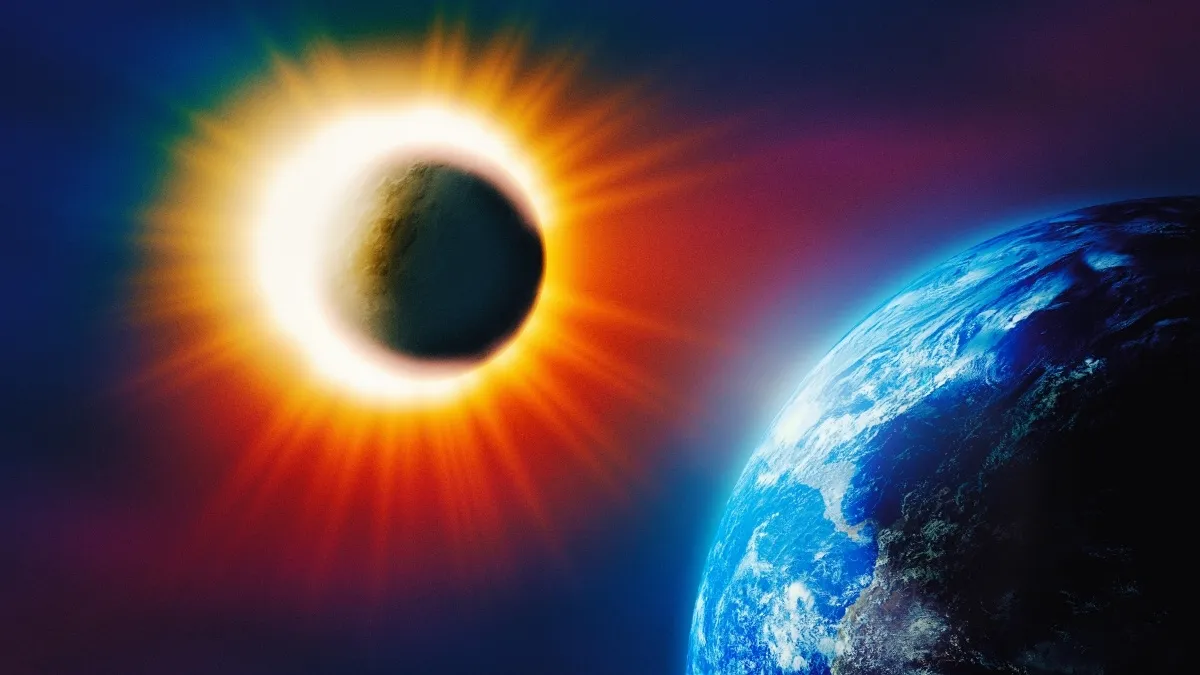
An eclipse takes place when something blocks another from view. For instance, during a solar eclipse, the Moon blocks the view of the Sun from the Earth. Eclipses which will be visible from the United States in 2026 are natural sky sights that include the alignment of the sun, moon, and/or earth resulting in dark shadows and/or glowing rings.
Such events attract millions of viewers because of their rarity and uniqueness, suitable for sky gazers wishing to view them in backyards and parks. NASA reports that there are approximately 15-20 episodes of partial solar eclipses that happen once in a century within the U.S.
Check the full list of eclipses visible from the United States in 2026, including dates, types, and viewing tips in this article below.
List of Eclipses Visible from the United States in 2026
The upcoming eclipses visible from the United States in 2026 comprise two eclipses of the moon and one partial solar eclipse, which can be seen from various locations. The United States, although cannot see any total solar eclipses, can see excellent views from locations in the north.
| Date | Type | Visibility in the U.S. | Best Regions |
| March 3, 2026 | Total Lunar | Full across all states | Everywhere, peaks around midnight ET |
| August 12, 2026 | Partial Solar | Partial in northern U.S., Alaska | Alaska, northern states like Maine |
| August 28, 2026 | Partial Lunar | Visible nationwide | All states, evening hours |
(Source: NASA)
What are Eclipses?
Eclipses take place when the sun, earth, and moon are in a straight line to each other.
During a solar eclipse, the sun will darken the day by passing in front of the Sun. Similarly, a lunar eclipse will cause the moon to look red or dim due to the earth blocking the Sun’s rays.
We should look forward to a safe look at a partial solar eclipse and a full view of the lunar surface in the U.S. events of 2026.
-
Total lunar eclipses like March 3 let everyone see the "blood moon" effect from any dark spot.
-
Partial solar needs eclipse glasses for safety in Alaska and far north.
-
These align with earth's orbit, happening 2-5 times yearly worldwide.
Read about Why is the Annular Solar Eclipse Called the "Ring of Fire"?
When is the Next Solar Eclipse 2026?
The next solar eclipse occurring in the U.S. happens in 2026 and is a partial eclipse. It happens on August 12.
A total solar eclipse occurs over Greenland and Iceland on this day. However, Americans will see 30-50% coverage in Alaska, Canada’s northern border, and other states like Maine. For sunrise viewing, check local times at timeanddate.com. Wear certified glasses to view.
-
Alaska gets the deepest partial at over 40% obscured.
-
The Northeast U.S. sees 10-20% bite from the sun.
-
No totality in the contiguous U.S., next in 2033 for Alaska.
Check the difference between Artemis 2 vs Artemis 1 here.
Conclusion
Eclipses visible from the United States in 2026 include three free spectacles: lunar total and partial eclipses, as well as a solar bite from the north. Such unusual celestial alignments remind us of our place in the universe, evoking awe in us all. So be sure to mark your calendar, grab your safe viewing equipment, and enjoy the magic above!


-1770963049694_t.webp)

Comments
All Comments (0)
Join the conversation