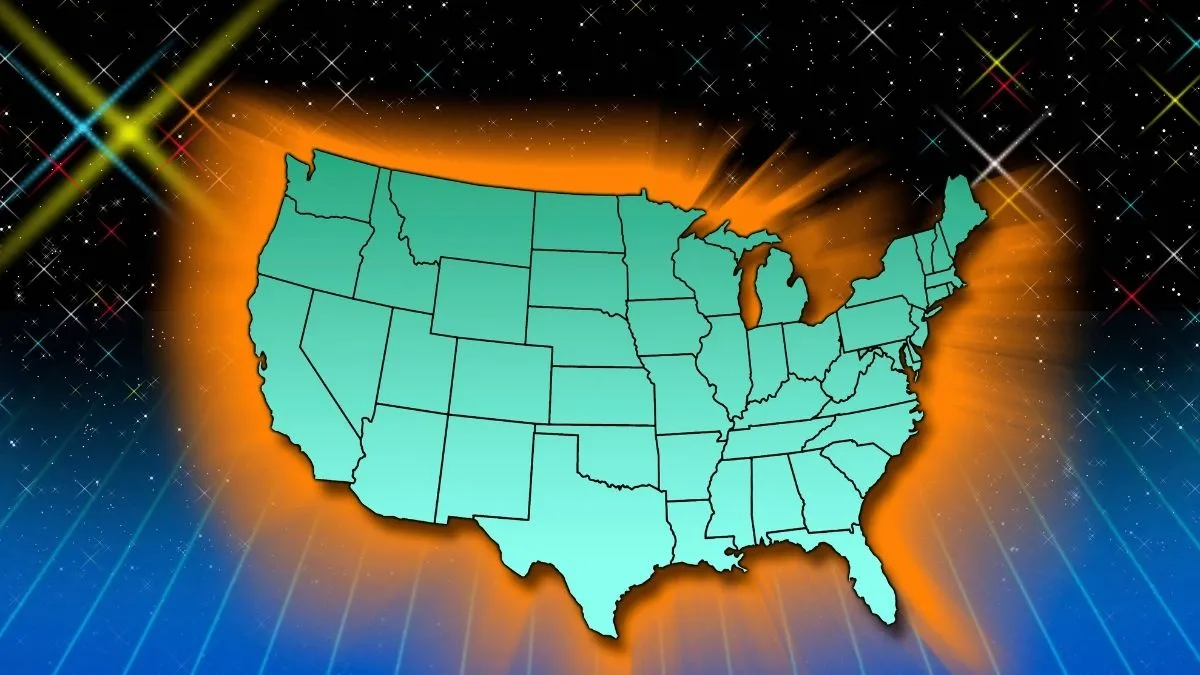
Landlocked States in U.S.: A landlocked state, as defined by geography, is a state that lacks direct access to the ocean, gulf, or open seas. This means a landlocked state will have no access to the Pacific, Atlantic, or Gulf of Mexico.
Thus, the United States has 27 total landlocked states that are considered mainland USA. Within this grouping of landlocked states are those that need to cross the fewest number of states to reach an ocean; thus, some landlocked states may only cross one other state before reaching an oceanic coastline, whereas others may require crossing two or three states in total.
By knowing what a landlocked state is and where they are located in the United States, we can gain a better understanding of U.S. geography, commerce, logistics, and economic disparity due to population development and transportation of goods.
READ | Which U.S. State Touches Two Oceans?
Landlocked States in the U.S.
This article will provide you with a clear list of landlocked states in the U.S.
| States | Landlocked Status |
| Arizona | Single Landlocked |
| Arkansas | Single Landlocked |
| Idaho | Single Landlocked |
| Kentucky | Single Landlocked |
| Michigan | Single Landlocked |
| Minnesota | Single Landlocked |
| Montana | Single Landlocked |
| Nevada | Single Landlocked |
| New Mexico | Single Landlocked |
| North Dakota | Single Landlocked |
| Ohio | Single Landlocked |
| Oklahoma | Single Landlocked |
| Pennsylvania | Single Landlocked |
| Tennessee | Single Landlocked |
| Vermont | Single Landlocked |
| West Virginia | Single Landlocked |
| Colorado | Double Landlocked |
| Kansas | Double Landlocked |
| Illinois | Double Landlocked |
| Iowa | Double Landlocked |
| Missouri | Double Landlocked |
| South Dakota | Double Landlocked |
| Utah | Double Landlocked |
| Wisconsin | Double Landlocked |
| Wyoming | Double Landlocked |
| Nebraska | Triple Landlocked |
Landlocked states form a significant portion of the United States and play an important role in the nation’s geography and economy.
Despite lacking direct access to oceans, these states rely on rivers, lakes, railways, and interstate trade routes to support commerce and transportation.
Recommended Reading:


-1768307949661.jpg)

Comments
All Comments (0)
Join the conversation