Show Key Points
Although both ski mountaineering and cross-country skiing can be classified as endurance based, each discipline has been developed primarily to fulfil different purposes through the means of traversing snowy terrain with a pair of skis.
Ski mountaineering is focused on climbing steep and often remote mountain terrain and going down again, while cross-country skiing is intended to facilitate travel over long distances on relatively flat or gently rolling pieces of snow-covered land either for recreational purposes or competing in races.
Both ski mountaineering and cross-country skiing require technique and endurance; however, both disciplines present unique challenges and goals.
By being aware of how each discipline varies, newcomers may find it easier to figure out which type is most suited for them and be able to compare the unique characteristics of each discipline.
Check Out: Who Has Won the Most Winter Olympic Medals from the U.S.?
What is Ski Mountaineering?
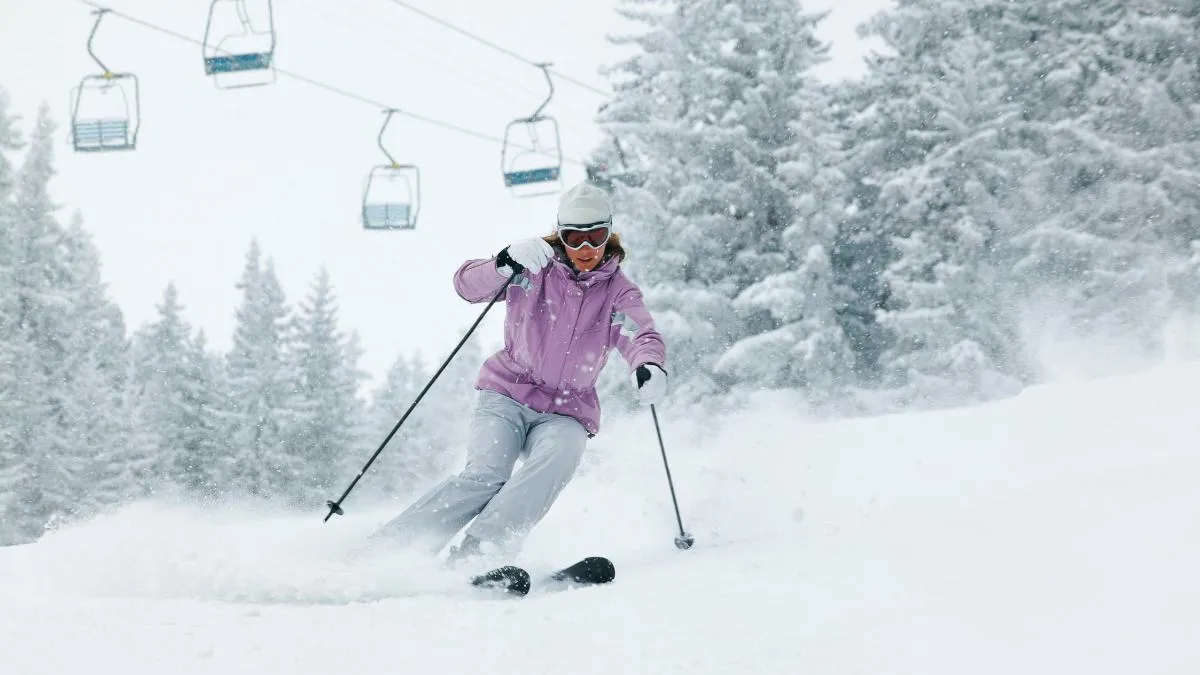
Source: Expat Explore
Also known as skimo, ski mountaineering combines alpine skiing and ascending a mountain. Ski mountaineers ascend hills and mountains utilizing their skis that have skins applied to the base allowing for upward climbing but preventing any backward movement. Upon arriving at the top of the mountain, the mountaineers will remove their skins and ski downhill.
Although ski mountaineering can happen anywhere in the mountains, most of the skiing is accomplished in very steep and isolated mountain ranges.
Therefore, ski mountaineers must overcome difficulties with navigation in difficult to find areas, avalanche dangers and changing weather patterns. In addition to being physically fit for ascending and skiing downhill, ski mountaineers should also possess a significant amount of knowledge regarding mountain safety practices.
What Is Cross-Country Skiing?
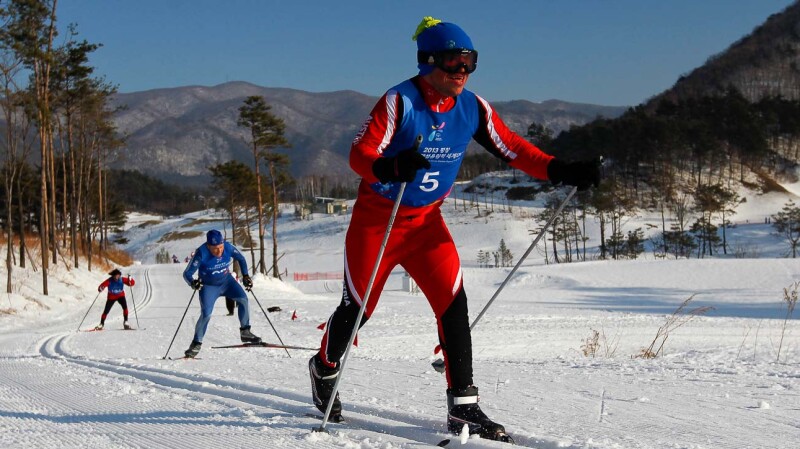
Source: Special Olympics
Cross-country skiing takes place on snow-covered ground generally on relatively flat and gentle hills. It is one of the original forms of skiing and is enjoyed for a variety of recreational reasons as well as in fitness and for racing.
Like all Nordic skiing, cross-country skiing is regulated by the International Ski and Snowboard Federation, known as FIS. In addition to the fact that many people do this type of skiing on groomed trails located in parks, forests, or ski areas and provide easy access to entry-level cross-country skiers.
Major Differences between Ski Mountaineering and Cross Country Skiing
Terrain and Environment
The terrain for ski mountaineering is steep, and much of the skiing is done in remote locations backcountry, where there are usually natural hazard.
The terrain for cross-country skiing is flat or rolling gentle, the trails are usually groomed and do not require technical skills to access.
Purpose and Skill Level
The purpose of ski mountaineering is to ascend and descend mountains. Ski mountaineering requires advanced skiing as well as mountaineering skills.
The purpose of cross-country skiing is to develop endurance as well as to travel a distance. The sport of cross-country skiing is appropriate for all ability levels.
Equipment and Safety
The equipment used for ski mountaineering includes specialized touring ski equipment (i.e., ski boots, climbing skin, and helmet) and avalanche safety gear.
The equipment used for cross-country skiing includes lightweight skis, boots, and poles. Cross-country skiing is a sport with generally lower risk in controlled environments.



-1771483621760_t.webp)
Comments
All Comments (0)
Join the conversation