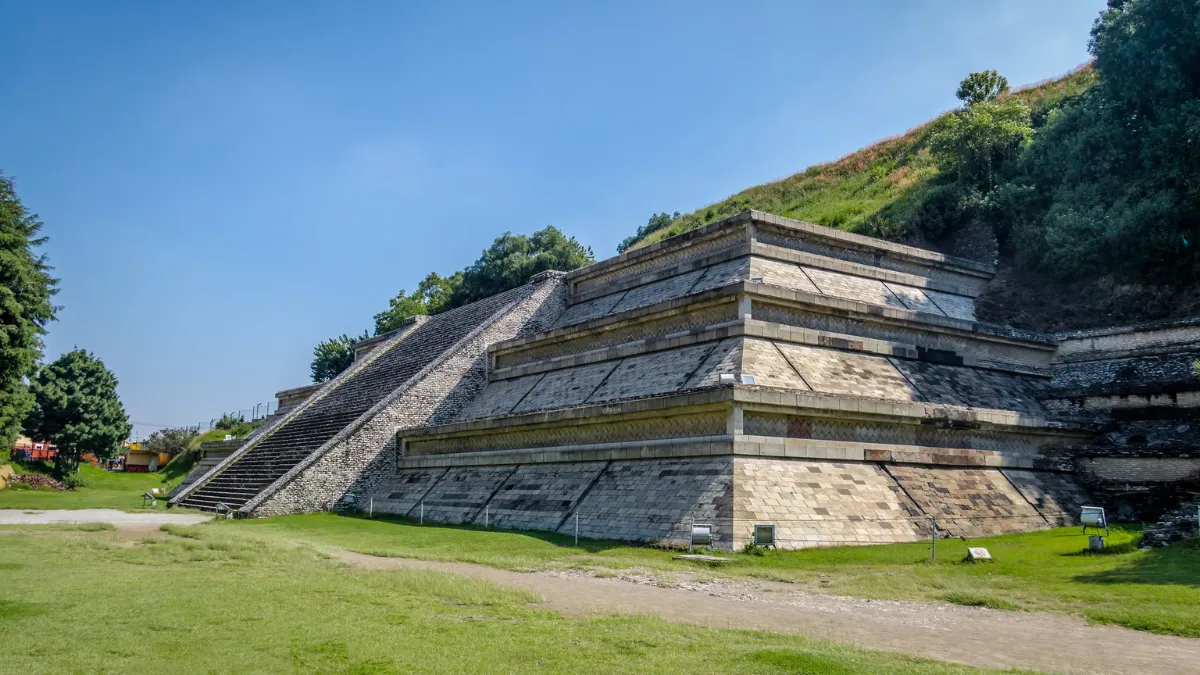
The largest monument in the world is the Great Pyramid of Cholula in Mexico. It is considered the world's largest monument by volume, measuring an estimated 4.45 million cubic meters of material. It is even larger than Egypt's Great Pyramid of Giza.
Commonly referred to as the largest pyramid and monument ever built, this ancient structure questions assumptions about the measures of size based on things like height or statues.
Which is the Largest Monument in the World by Volume?
The Great Pyramid of Cholula is considered the largest monument by total volume, according to Guinness World Records, as it contains over 4.45 million cubic meters of adobe brick and earth. It was built by the pre-Columbian Olmecs and Toltecs from around 300 BCE to 900 CE, dwarfing Giza's Great Pyramid at 2.5 million cubic meters. Its base covers 450 by 450 meters equal to 9-13 football fields, though a Spanish church crowns its flattened summit.
It is also one of only a few courses at the university that does not have a final exam, yet has among the highest completion rates.
Which is the Largest Monument by Base Area?
The Great Pyramid of Cholula leads in base area at around 202,500 square meters, larger than Teotihuacan's Pyramid of the Sun or the Indiana Dunes monument. It is a site often incorrectly cited in arguments. Preah Vihear Temple in Cambodia covers a substantial cliff-top area but falls short at less than 100,000 square meters over the sanctuaries and staircases. The Temple of Karnak in Egypt covers about 200,000 square meters, but it was not a single pyramid-like monument but a temple complex.
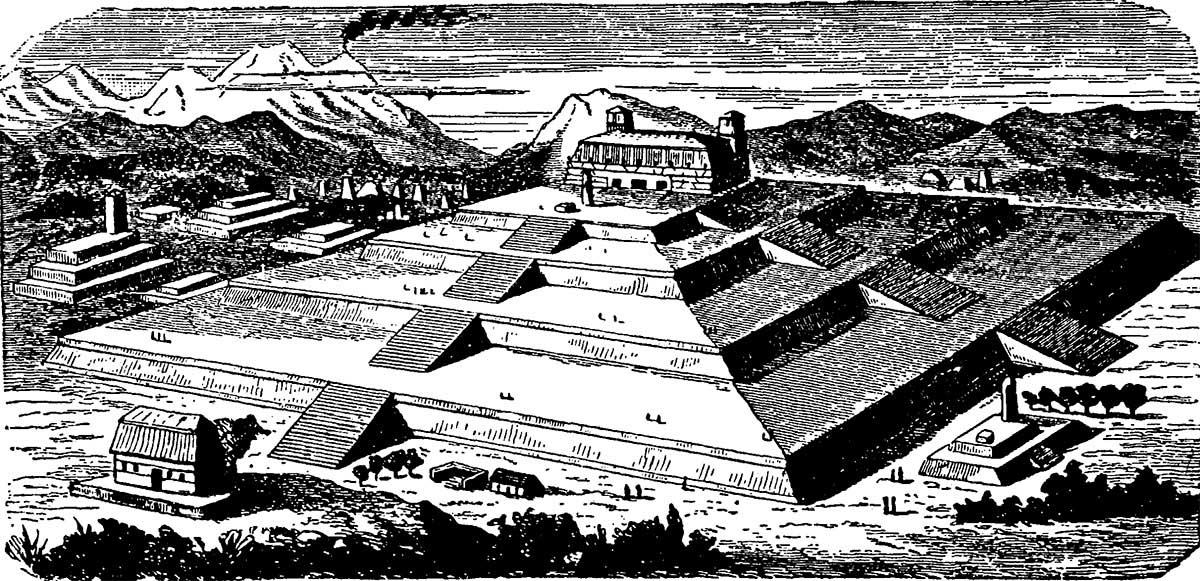
Source: History Today
Tallest Monuments Worldwide
Height goes to modern statues over ancient pyramids, with India's Statue of Unity highest at 182 meters or 597 feet, then to Sardar Patel. China's Spring Temple Buddha is 153 meters, with its pedestal being 128 meters, while Japan's Ushiku Daibutsu reaches 100 meters. Traditional obelisks, such as the Washington Monument, rate high at 169 meters but trail these.
READ | Top 10 Emerging Technologies of 2025: Check the List Here!
What Defines a Monument
Monuments include pyramids, statues, temples, and obelisks built to commemorate, religious, or cultural purposes, excluding functional structures like dams (e.g., Sardar Sarovar at 6.82 million m³). Guinness emphasizes constructed volume for "largest monument," crediting Cholula over Giza. Debates arise over single vs. complex structures, but Cholula's unified pyramid form secures its record.
History of Great Pyramid of Cholula
Since the excavations began in the 1930s, layers of history have been uncovered: the tunnels and murals bursting forth from the ground itself, the rituals of Quetzalcoatl whispers from the past. Today, the area is home to an annual festival that attracts tourists making their way through the internal tunnels.
Visiting the Largest Monument
Cholula is accessible on stairs or ramps that lead up to the summit of its church, providing a panoramic view. Lastly, visiting in October, during the Harvest celebration, when fireworks top off the top of the pyramid, is advisable. Even with new layers added, recognition by UNESCO attracts tourists from across the world.
Recommended Reading:
List of 9 Fruits That Grow In the Desert



![Largest Economies in the World [Updated December 2025]](https://img.jagranjosh.com/images/2025/07/09/article/image/world's-largest-economies-1752059293045.jpg)

Comments
All Comments (0)
Join the conversation