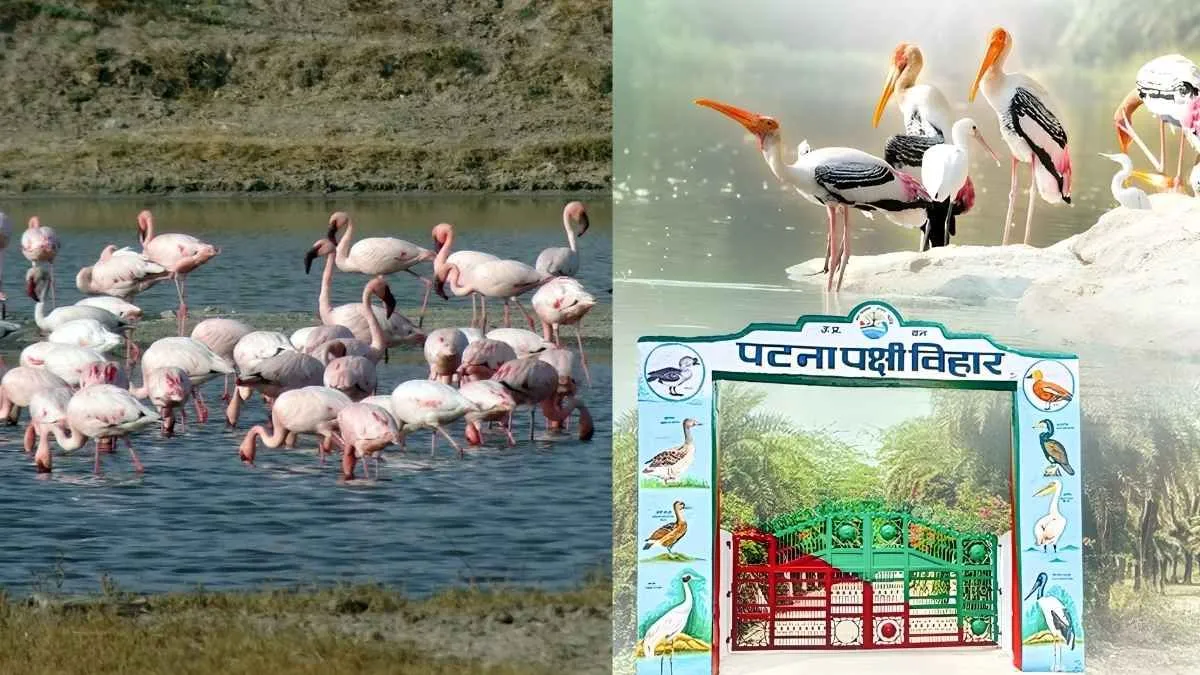
A Wetland is a piece of land that’s wet most or all the time, long enough that it contains plants, animals, and even micro-organism which are generally evolveds for wet conditions forever to change the biochemistry of the soil.
The Convention on Wetlands is to “Conserve the Wetland & wise use of all wetland through local and national actions and international cooperation, as a contribution towards achieving sustainable development throughout the world”.
Today, the Ramsar sites are the world’s largest network of protected areas for wetlands, and there are 2,520 Ramsar sites across 172 territories, covering a total area of 253,084,219 hectares.
India became a party to this convention in 1982, and as of 2026, it has a total of 98 Ramsar sites covering a Surface area of 1.384.140 hectares.
In this article, we will explore how many Ramsar Sites were added in 2026.
Newly Added Ramsar Sites in India in 2026
Recently, in India, Union Minister for Environment, Forest and Climate Change Shri Bhupender Yadav has announced the addition of two new wetlands to India’s Ramsar network, ahead of World Wetlands Day on 02.02.2026.
Congratulations Team Uttar Pradesh and Gujarat and the Wetland community!
— Bhupender Yadav (@byadavbjp) January 30, 2026
With World Wetlands Day close by, I am delighted to announce that there are two new additions to India’s Ramsar growing network.
Patna Bird Sanctuary in Etah, Uttar Pradesh, and Chhari-Dhand in Kutch,… pic.twitter.com/VK8lVeGe07
| Ramsar Sites | State | Designation Date | Site Number | Area (ha) |
| Patna Bird Sanctuary | Uttar Pradesh | 04-12-2025 | 2589 | 108.9 |
| Chhari-Dhand | Gujarat | 16-06-2025 | 2588 | 22,700.0 |
Data Source: Ramsar Sites
Brief overview of the Ramsar Sites in India in 2026
1. Patna Bird Sanctuary
Patna Bird Sanctuary in Etah, Uttar Pradesh has been declared India’s newest Ramsar Site!
— MyGov UP (@MyGov_UP) February 1, 2026
With this addition, India now has 98 Ramsar sites, up from 26 in 2014, strengthening biodiversity conservation and protection of bird habitats. pic.twitter.com/zm2vEim7L8
District: Etah
State: Uttar Pradesh
Interesting Facts:
-
The Patna Bird Sanctuary, which is nowa Ramsar Sites is, consists of freshwater marshes, woodlands and grasslands, and is surrounded by an agricultural landscape.
-
This site is home to 178 bird species and 252 plant species
-
It is recognised as an Important Bird and Biodiversity Area (IBA) by BirdLife International
-
This Ramsar Site also supports waterbirds and larger species like the vulnerable mugger crocodile
-
It is popular for religious tourism and nature recreation
-
Although it has been listed in Ramsar Sites, it faces threats from tourism pressure and invasive plant species
-
Conservation efforts include:
-
Removal of invasive plants
-
Controlled tourism activities
-
Monitoring of migratory birds and avian diseases
2. Chhari-Dhand
Delighted that the Patna Bird Sanctuary in Etah (Uttar Pradesh) and Chhari-Dhand in Kutch (Gujarat) are Ramsar sites. Congratulations to the local population there as well as all those passionate about wetland conservation. These recognitions reaffirm our commitment to preserving… https://t.co/0O3R5TBqbJ
— Narendra Modi (@narendramodi) January 31, 2026
District: Kutch
State: Gujarat
Interesting Facts:
-
The Site is a seasonal saline wetland located between the arid grasslands of Banni and the salt flats of Kachchh.
-
It floods during the monsoon season, forming extensive water bodies that provide important habitat for a wide range of plant and animal species.
-
Supports arid-adapted plants like:
-
Indian gum tragacanth
-
Critically endangered Indian bdellium tree
-
Important wintering site for migratory waterbirds
-
Hosts:
-
Critically endangered sociable lapwing
-
Vulnerable common pochard
-
Around 30,000 common cranes every year
-
Threatened by invasive species
-
Restoration plans involve:
-
Local government bodies
-
NGOs
-
Community participation
Conclusion
The addition of two Newly Added Ramsar Sites in India in 2026, Patna Bird Sanctuary and Chhari-Dhand, is strengthening India’s commitment to wetland conservation.
These rich ecological areas are always supported in biodiversity conservation, migratory birds, and for local livelihood, highlighting the importance of sustainable management and community-driven conservation for making efforts for long-term envirment protrection.




Comments
All Comments (0)
Join the conversation