
King of Dry Fruits: Almond is known as the King of Dry Fruits because of its high nutritional value, rich protein and healthy fat content, wide culinary use, and strong economic importance in global dry fruit production and trade. Almonds are widely consumed as a premium dry fruit in diets, traditional medicine, confectionery, snacks, and health-food industries, which is why they hold the title King of Dry Fruits.
Why Is Almond Called the King of Dry Fruits?
Almonds are called the King of Dry Fruits because they are nutritionally dense and rich in vitamins, minerals, fibre, antioxidants, and plant protein. They are considered one of the most valuable dry fruits in terms of health benefits, commercial demand, and global market value. Almonds are widely used in nutrition, sweets, bakery products, cereals, milk substitutes, and dietary supplements, making them one of the most important dry fruits in the world.
Scientific Name of Almond
The scientific name of almond is Prunus dulcis. It belongs to the Rosaceae family and is cultivated mainly in temperate and semi-arid regions.
Nutritional Importance of Almonds
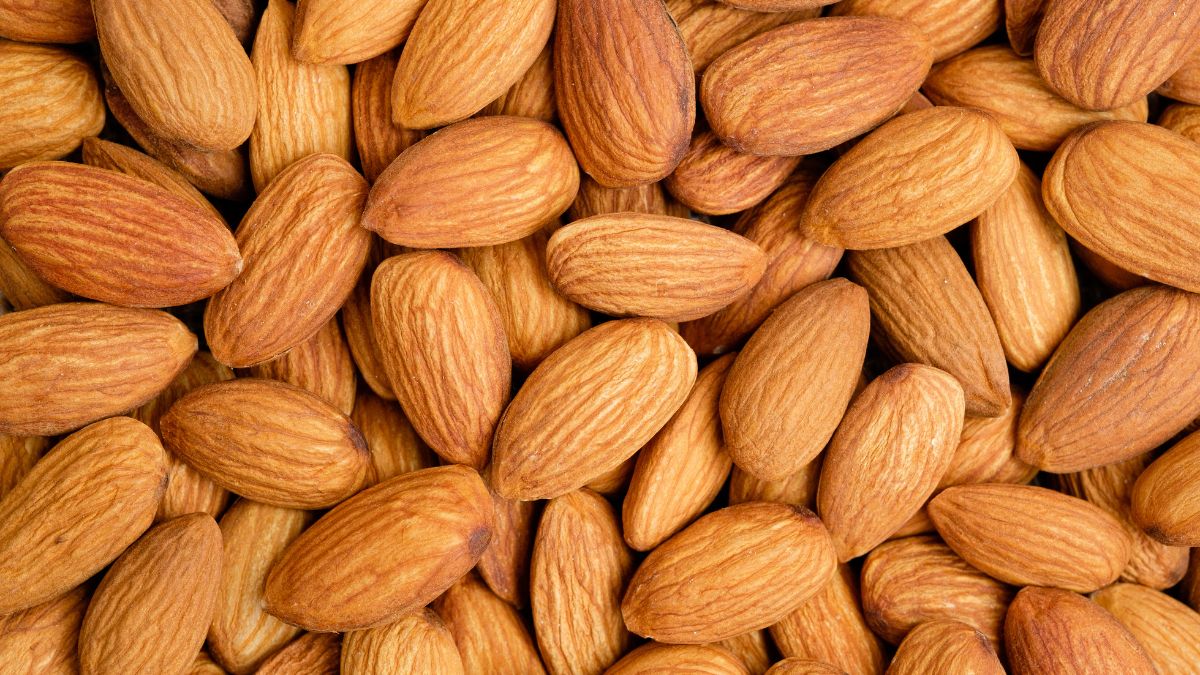
Almonds are an important source of plant-based protein, healthy monounsaturated fats, vitamin E, magnesium, calcium, manganese, and dietary fibre. They are commonly included in daily diet plans, brain-health diets, heart-healthy diets, weight-management snacks, and high-energy food categories.
Economic Importance of Almond Production
Almonds play a major role in the global dry fruit industry, food processing sector, confectionery manufacturing, oil extraction, and export markets. Almond farming supports agriculture-based livelihoods, orchard cultivation, and value-added product industries such as almond flour, almond oil, almond butter, and almond milk.
Largest Almond Producer in the World
The United States is the largest producer of almonds in the world, with California accounting for the majority of global almond production and international almond exports. The U.S. leads the world market in commercial almond cultivation, processing, packaging, and export trade.
Largest Almond Producer in India
In India, Jammu and Kashmir, Ladakh, and Himachal Pradesh are the major almond-producing regions. These regions have suitable climatic conditions for temperate-fruit cultivation and contribute significantly to domestic almond production and orchard-based farming.
Largest Almond Exporter in the World
The United States is also the largest exporter of almonds globally, supplying a major share of almonds to markets in Asia, Europe and the Middle East through large-scale production and export-oriented processing networks.
Interesting Facts About Almond
High-Value Commercial Dry Fruit
Almonds are one of the most commercially traded dry fruits in global markets, with strong demand in food processing, confectionery, bakery, and nutrition industries.
Major Ingredient in Health and Fitness Diets
Almonds are widely consumed in protein-rich diets, brain-boosting diets, and heart-healthy diets because of their nutrient density and healthy fat profile.
Used in Multiple Value-Added Products
Almonds are processed into almond milk, almond flour, almond oil, almond butter, and roasted snack products, increasing their economic value in the food industry.
Important Horticulture Crop in Temperate Regions
Almond cultivation supports orchard-based agriculture and horticulture economies in temperate and semi-arid regions across the world.
Strong Demand in Indian Sweets and Traditional Foods
Almonds are widely used in Indian sweets, desserts, festival foods, and traditional recipes, making them one of the most preferred dry fruits in India.
Read more: Which Crop Is Called the King of Oilseeds?
Almond is known as the King of Dry Fruits because of its high nutritional value, strong economic significance, global commercial demand and major role in food, health, and dry fruit industries. Keep reading for more such topics.






Comments
All Comments (0)
Join the conversation